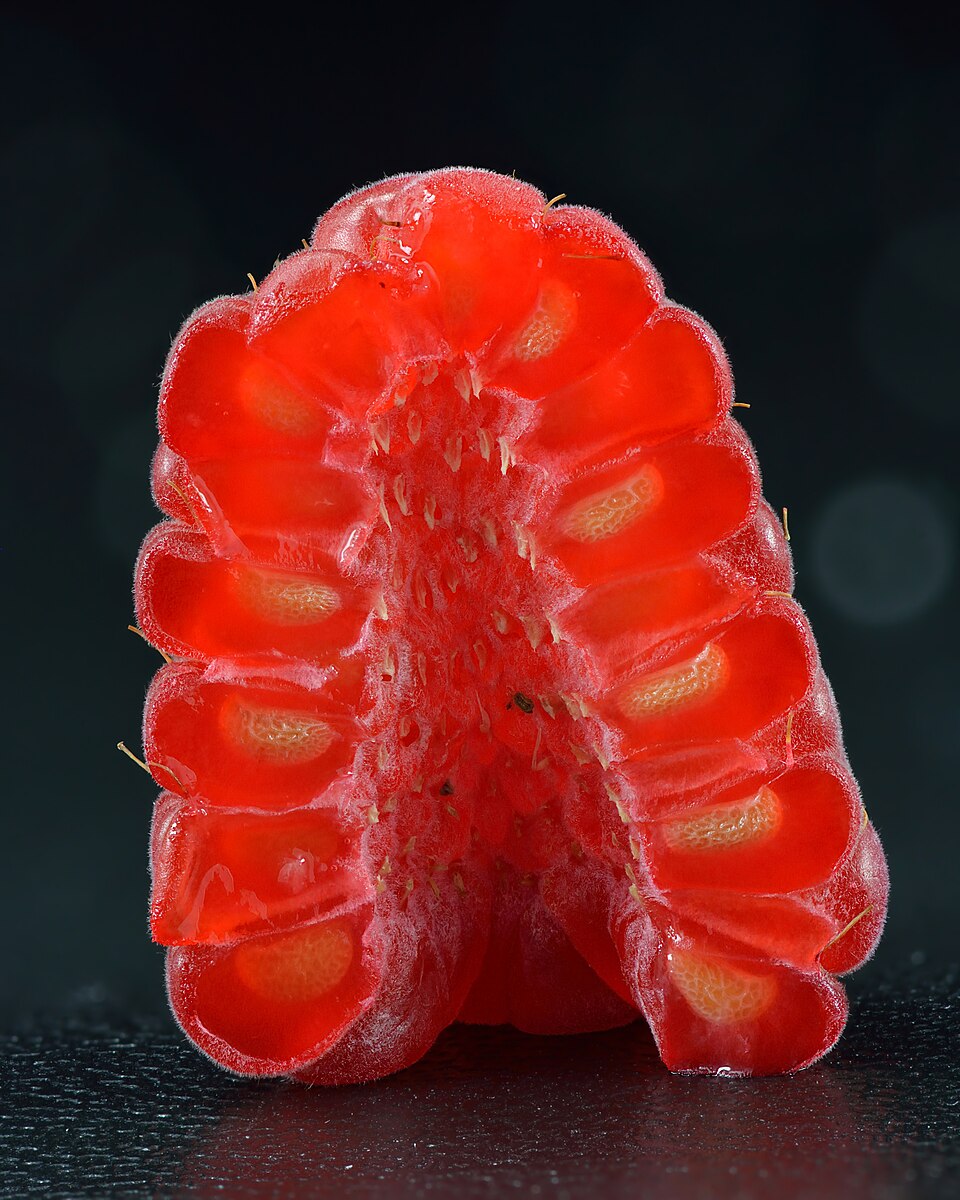
The Future of Freshness: Raspberry Pi's Revolution in Raspberry Fruta Quality Sorting
In today's competitive global market, the quality of fresh produce is paramount. Consumers demand perfection, and for delicate fruits like raspberries, ensuring consistent quality from farm to table is a significant challenge. Known for their exquisite flavor and nutritional benefits, Framboesa (Raspberry), or Raspberry Fruta, requires meticulous handling. This is where cutting-edge technology, particularly the versatile Raspberry Pi, is stepping in to redefine fruit quality sorting. No longer a distant dream, automated, AI-driven systems are becoming the standard, ensuring that only the finest Raspberry Fruta reaches our plates, minimizing waste and maximizing value.
The traditional methods of manual fruit sorting are prone to human error, inconsistency, and are labor-intensive, often leading to significant post-harvest losses. Imagine the sheer volume of Raspberry Fruta harvested globally, each berry needing individual assessment. This task is monumental. Thankfully, innovations in IoT (Internet of Things) and Artificial Vision, powered by compact yet powerful devices like the Raspberry Pi, are ushering in a new era of precision agriculture and food processing. These systems can accurately identify and classify fruits based on a multitude of quality parameters, ensuring optimal marketability and extending shelf life.
The Imperative of Precision Sorting for Delicate Raspberry Fruta
Raspberries are notoriously fragile, susceptible to bruising, mold, and rapid spoilage. Their delicate nature makes quality assessment a critical bottleneck in the supply chain. A single spoiled berry can contaminate an entire batch, leading to significant economic losses for growers and distributors. This is why precision sorting for Raspberry Fruta isn't just an advantage—it's an absolute necessity.
- Consumer Expectation: Modern consumers expect unblemished, perfectly ripe raspberries, especially given their premium price point. Consistent quality builds brand loyalty and commands higher market value.
- Shelf Life Extension: Removing substandard or damaged fruit early prevents the spread of rot and mold, significantly extending the overall shelf life of the remaining healthy berries. This is vital for fruits that travel long distances.
- Waste Reduction: By accurately identifying and segregating berries that don't meet fresh market standards, these can be diverted for other uses, such as processing into jams, purees, or dried raspberry products, effectively minimizing food waste and creating new revenue streams.
- Food Safety: Automated systems can detect foreign objects or signs of contamination that might be missed by the human eye, contributing to a safer food supply.
The financial impact of efficient sorting is profound. Growers can secure better prices for consistent, high-quality Raspberry Fruta, while processors can streamline their operations and reduce waste-related costs. This efficiency translates directly into profitability and sustainability for the entire supply chain.
Raspberry Pi: The Brains Behind Smart Fruta Sorting Systems
At the heart of many next-generation fruit sorting systems lies the Raspberry Pi. This credit-card-sized single-board computer might seem unassuming, but its capabilities make it an ideal choice for edge computing applications in industrial settings. When paired with advanced artificial vision algorithms and IoT components, the Raspberry Pi transforms into a powerful tool for automating complex tasks like Raspberry Fruta quality assessment.
Consider an industrial IoT and Artificial Vision system designed to classify fruits like raspberries on a conveyor belt based on their quality. The Raspberry Pi serves as the central control unit, orchestrating a sophisticated "hybrid pipeline" for real-time analysis and action:
- Cost-Effectiveness and Accessibility: The low cost of a Raspberry Pi makes advanced sorting technology accessible even to smaller operations, democratizing high-tech solutions.
- Computational Power for Edge AI: While small, modern Raspberry Pi models (like the Pi 4 or Pi 5) possess sufficient processing power to run lightweight machine learning models directly on the device. This "edge computing" approach means decisions are made instantly, without needing constant cloud connectivity, crucial for real-time industrial applications.
- GPIO Pins for Real-time Control: One of the Raspberry Pi's greatest strengths is its General Purpose Input/Output (GPIO) pins. These allow it to directly interface with and control external hardware components such as motors, servos, and solenoids. This is essential for actuating sorting mechanisms on a conveyor belt.
- Linux Ecosystem & Flexibility: Running a full Linux operating system provides unparalleled flexibility. Developers can leverage a vast array of open-source libraries and tools, including powerful computer vision frameworks like OpenCV and machine learning platforms like TensorFlow Lite.
- Compact Form Factor: Its small size allows the Raspberry Pi to be easily integrated into existing conveyor systems or custom-built sorting machines without requiring significant space.
The Raspberry Pi's role is not just about processing data; it's about connecting the digital world of AI vision to the physical world of industrial automation. It interprets the visual data, makes an informed decision about the Raspberry Fruta's quality, and then immediately commands a mechanical response to sort that specific berry.
Unpacking the Hybrid AI Vision Pipeline for Raspberry Fruta
The core innovation in these next-gen systems lies in their sophisticated artificial vision pipeline, which the Raspberry Pi meticulously manages. This "hybrid" approach combines traditional image processing with advanced machine learning to achieve unparalleled accuracy in Raspberry Fruta quality sorting.
1. High-Speed Image Acquisition & Pre-processing
As Raspberry Fruta moves along a conveyor belt, high-resolution cameras rapidly capture images. The timing is critical to ensure each berry is photographed clearly. Pre-processing steps might include basic adjustments like lighting correction or resizing to optimize images for subsequent analysis.
2. Background Removal and Segmentation with OpenCV
This is where the power of libraries like OpenCV comes into play. The initial images often contain "noise"—elements like the conveyor belt itself, debris, or shadows that are irrelevant to the fruit's quality. OpenCV is used to:
- Segment the Fruit: Isolate the individual Raspberry Fruta from its background. This involves techniques like color thresholding, contour detection, or morphological operations to create a clean, focused image of just the berry.
- Eliminate Background Noise: By effectively removing the conveyor band and any other clutter, the system ensures that the subsequent AI analysis focuses solely on the fruit, preventing false positives or negatives.
This segmentation step is crucial for accurate classification, much like isolating a specific word before running a spell checker.
3. AI-Powered Classification with MobileNetV2 and TensorFlow Lite
Once the Raspberry Fruta is cleanly segmented, its image is fed into a trained neural network. A popular choice for edge devices like the Raspberry Pi is MobileNetV2, a convolutional neural network (CNN) architecture known for its efficiency and accuracy. This network, often deployed using TensorFlow Lite (a lightweight version of TensorFlow optimized for mobile and embedded devices), performs the actual quality classification.
The neural network has been "trained" on thousands, if not millions, of images of raspberries classified into various quality categories (e.g., ripe, overripe, damaged, moldy, perfect). Based on what it has learned, it can rapidly:
- Identify Ripeness: Distinguish between perfectly ripe, underripe, or overripe berries based on subtle color variations and textures.
- Detect Defects: Pinpoint bruises, cuts, mold, insect damage, or irregular shapes.
- Assess Size and Shape: Categorize berries by size for different market segments or detect deformities.
The advantage of TensorFlow Lite on Raspberry Pi is its ability to perform these complex inferences at the "edge" – right on the sorting machine – offering near-instantaneous results without relying on a constant internet connection or powerful cloud servers. This means faster sorting speeds and reduced latency.
4. Real-time Actuation and Sorting
The final step, orchestrated by the Raspberry Pi, is the physical sorting. Based on the classification result from the AI model, the Raspberry Pi sends signals to control various mechanical components:
- Servos: Often used to control small, precise movements, such as deflecting gates that gently guide Raspberry Fruta into specific collection bins.
- Motors: Powering conveyor belt sections, robotic arms, or other larger mechanical sorting mechanisms.
This entire process—from image capture to physical sorting—happens in milliseconds, allowing for high-throughput, continuous operation, and consistent quality output for Raspberry Fruta.
Beyond Sorting: The Wider Impact on the Raspberry Fruta Supply Chain
The integration of Raspberry Pi-powered AI vision systems extends far beyond the immediate benefit of improved sorting. It creates a ripple effect throughout the entire Raspberry Fruta supply chain, offering unprecedented insights and efficiencies.
Enhanced Data Collection and Analytics
Every berry analyzed provides valuable data. The Raspberry Pi, as an IoT device, can log information on the quantity of each quality grade, the types of defects observed, and processing speeds. This data can be uploaded to a central cloud platform for deeper analytics, offering insights into:
- Harvesting Efficiency: Identifying specific fields or harvesting techniques that yield higher quality Raspberry Fruta.
- Post-Harvest Handling: Pinpointing bottlenecks or areas where damage occurs most frequently.
- Market Trends: Understanding demand for different quality grades and adjusting production accordingly.
This data-driven approach allows growers and processors to make informed decisions, optimize their operations, and even predict future yields and quality issues.
Improved Market Access and Value Creation
By consistently delivering top-quality Raspberry Fruta, producers can access premium markets and command better prices. Furthermore, the ability to accurately sort different grades opens up new possibilities:
- Fresh Market: Only the pristine berries go to retail for fresh consumption.
- Processing Market: Slightly imperfect but otherwise healthy berries can be directed towards juicing, purees, jams, or dried raspberry products, creating additional revenue streams instead of being discarded as waste. This is a significant boon for sustainability and profitability.
Reduced Labor Costs and Increased Throughput
Automated sorting significantly reduces the reliance on manual labor for this arduous task. This not only lowers operational costs but also allows human workers to be re-deployed to more complex or value-adding activities. The speed and consistency of machines also mean a much higher throughput, processing vast quantities of Raspberry Fruta in a fraction of the time it would take manually.
A Step Towards Sustainable Agriculture
Minimizing food waste is a cornerstone of sustainable agriculture. By optimizing quality sorting, less Raspberry Fruta goes to landfill, conserving resources used in its production (water, energy, land) and reducing carbon footprint. The ability to precisely grade fruit also means resources are allocated more efficiently throughout the supply chain.
Practical Tip: For small-scale growers interested in exploring this technology, starting with open-source frameworks and community support around Raspberry Pi and OpenCV can be a cost-effective way to pilot basic sorting capabilities before investing in larger industrial systems. There are numerous online tutorials and community forums dedicated to these projects.
Conclusion
The humble Raspberry Pi, once a hobbyist's delight, has matured into a powerful tool driving innovation in industrial sectors. Its application in next-gen Raspberry Fruta quality sorting represents a pivotal shift towards more efficient, sustainable, and profitable agricultural practices. By seamlessly integrating IoT, artificial vision, and real-time control, these systems ensure that only the finest raspberries reach consumers, while minimizing waste and maximizing value at every stage. As this technology continues to evolve, we can expect even greater precision, speed, and versatility, solidifying Raspberry Pi's transformative role in the future of food quality assurance.